The Book of the Usefulness of Animals
Golden insights: Ibn Al-Durayhim's bestiary and Mamluk art
The Book of the Usefulness of Animals (Kitāb manāfi’ al-hayawān) is a remarkable Arabic bestiary crafted in 1354, most likely in Syria, and is a significant artifact in the history of Mamluk painting. It stands out as one of the rare manuscripts from this period that reveals both its compilation date (755 in the Islamic calendar) and the name of its compiler, Ibn al-Durayhim al-Mawṣilī.
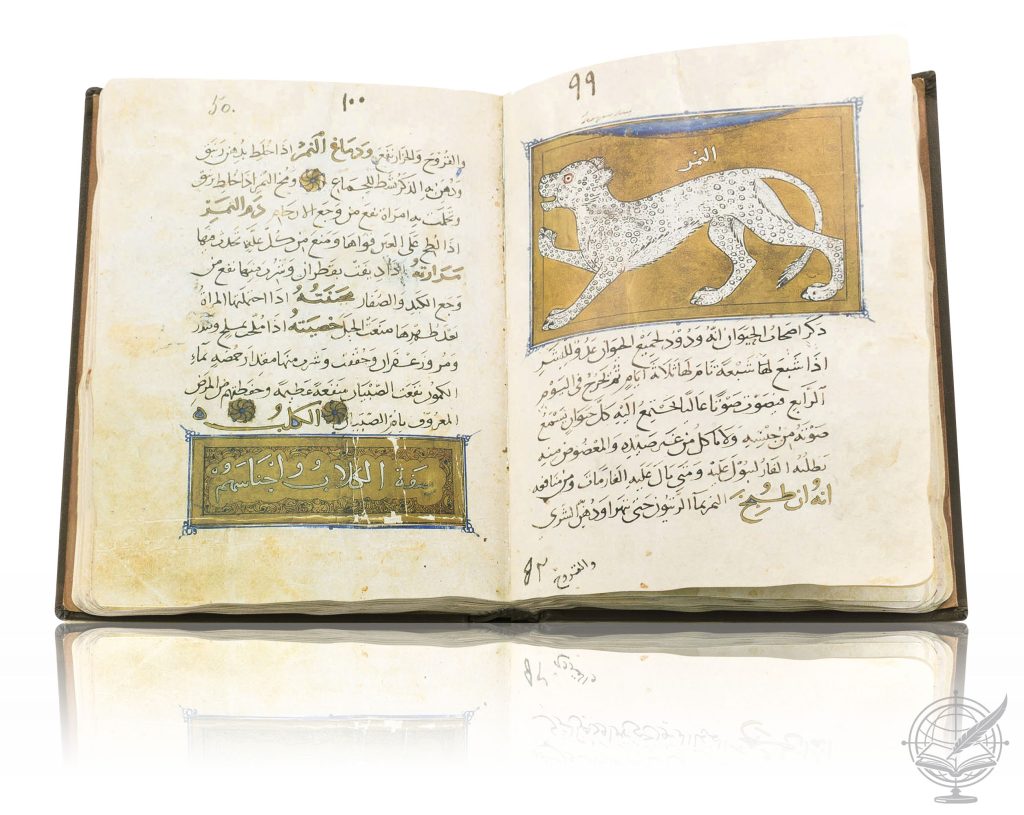
A significant element of this bestiary is its classification of living beings into different classes: humans, quadrupeds (both domestic and wild), birds, fishes, and insects. Each entry begins with a description of the animal’s features, habits, and behavior, followed by an account of its anatomical parts and their potential curative effects on humans.
This manuscript aligns with the textual tradition of bestiaries derived from Aristotle’s Zoology and Ibn Bakhtishū’s medical treatises. Only a few such illustrated manuscripts are extant-three in Arabic and two in Persian. The Escorial codex, with ninety-one high-quality miniatures, stands as a testament to this tradition.
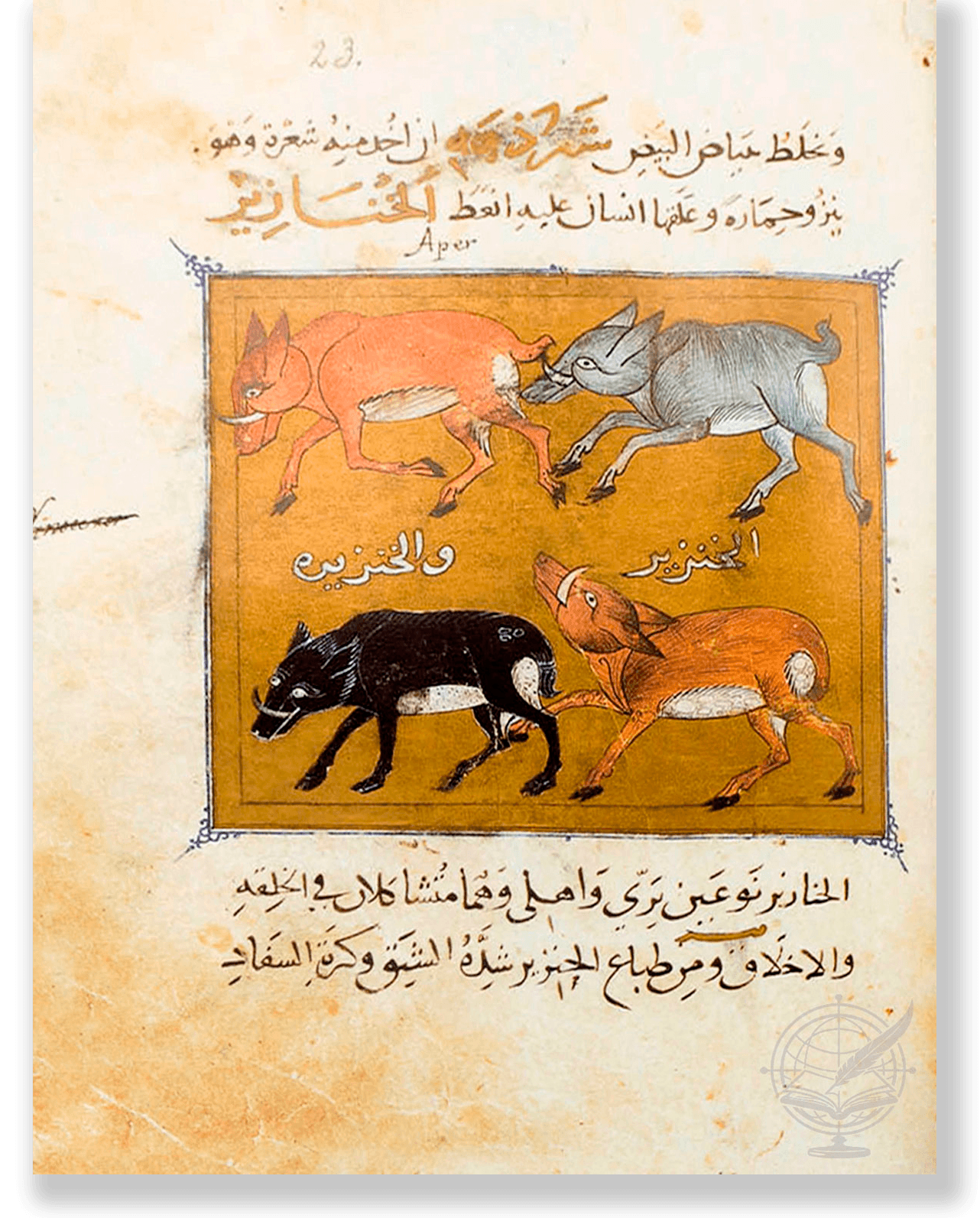
The miniatures in this bestiary play a crucial role, complementing the text by depicting the animals emblematically rather than providing accurate physical descriptions. The paintings, executed with broad brushstrokes and thickly textured paint, reflect a unique style. Surprisingly, the use of light and shadows in these miniatures involves gradations of the same color, departing from the common techniques of Islamicate painting.
The art in this bestiary follows the Syro-Iraqi style derived from Byzantine traditions and elements of the Baghdad School characteristic of Mamluk painting. Foreign influences, especially from Seljuk and Mongol cultures, are notable, distinguishing this manuscript from contemporary Syrian manuscript painting.
The text, written in elegant Arabic script (naskh) with titles and animal names in gold, is accompanied by abundant gold rosettes as decorative motifs. Two colophons attribute the compilation to Ibn al-Durayhim al-Mawṣilī, a person of high social standing and education. His compilation likely took place in Syria, possibly in Damascus.
The original binding of the manuscript is lost, but the current leather binding displays the stylized gridiron of Saint Lawrence, symbolizing the Escorial library.
Moreover, this unique work features not only the information on the Utility of Animals but also the Legenda Maior: The Life of Saint Francis of Assisi, connecting the manuscript to the veneration of St. Francis as the patron saint of animals and the environment.
The miniatures in this bestiary, executed on gold backgrounds, exhibit enchanting details and represent one of the earliest examples of oriental art using precious gold leaf technique. Each miniature encapsulates realistic poses of animals, encased in shimmering gold, creating standalone works of art that continue to captivate viewers even after centuries.
The facsimile edition of the Book of the Usefulness of Animals is complemented by a bookcase for its conservation and a complementary study book made by subject matter experts.
This facsimile is a unique edition of 950 books numbered and authenticated by notarial deed.
Tech Sheet
DATE:
XIV century.
ORIGINAL KEPT:
Royal Library of San Lorenzo de El Escorial monastery, ms. Árabe 898.
LANGUAGE:
Arabic.
FORMAT:
270 x 190 mm.
PAGES:
309 pages.
ILUMINATION:
Animal miniatures enhanced with gold.
BINDING:
Bound in aged leather.
Interested? Contact us
If you want to know more on this beautiful facsimile, how to admire or acquire it, we will be delighted to attend you.