Codex Calixtinus
The Way of St. James: The oldest guide for the pilgrimage to Santiago
Discover the new facsimile edition of the Codex Calixtinus — created in collaboration with the Archive of the Cathedral of Santiago de Compostela.
This is a key book for understanding the Camino de Santiago and everything related to the Jacobean tradition. It is not a speculative account of that initiatory route, but the Codex Calixtinus itself — the manuscript carefully preserved in the Archive of the Cathedral of Santiago de Compostela, written in the 12th century and considered one of the fundamental works of the Middle Ages. Although attributed to Pope Calixtus II, it is a work written by multiple authors, promoted and possibly partly composed by the Cluniac monks, who, from their Burgundian abbey, fostered and protected the pilgrimages to Santiago de Compostela.
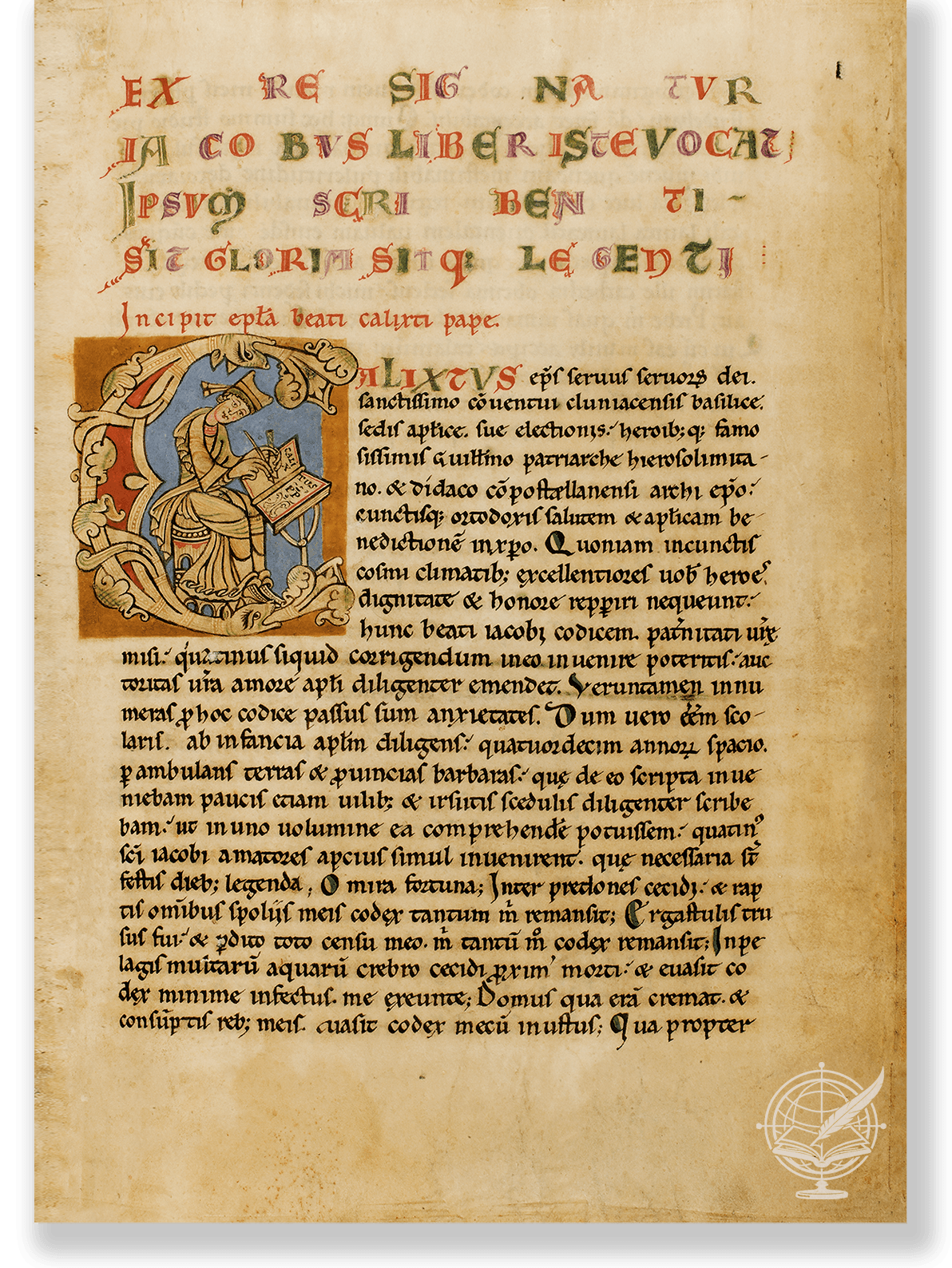
The Codex Calixtinus of the Cathedral of Santiago, also known as the Book of Saint James (Liber Sancti Iacobi), has accompanied and inspired pilgrims for more than eight and a half centuries. A brief invocation, both prayer and wish, opens and closes its main sections: “May the same glory be for the one who reads as for the one who writes: Ipsum scribenti sit gloria sitque legenti.”
Undoubtedly, the compiler of this book deserves recognition, as it perfectly reflects the phenomenon of the Jacobean pilgrimage, which reached great splendor in the mid-12th century. It is no coincidence that the city of Santiago de Compostela (UNESCO, 1985) is recognized as a World Heritage Site, built to welcome pilgrims and devotees around the tomb of the Apostle’s relics. This recognition extends to the entire Camino: the French Route (UNESCO, 1993), described in the Codex, also declared the First European Cultural Itinerary (Council of Europe, 1987), as well as the Northern Routes (UNESCO, 2015). The Codex Calixtinus itself was recognized as “Memory of the World” on October 31, 2017. These recognitions point to a first-rate historical and cultural value — not static or lifeless, but alive, just like the pilgrimage itself.
The Codex Calixtinus is a living book in many ways. It reflects a religious phenomenon capable of opening doors to different ways of believing, provided there is a spirit of search and openness. The text repeatedly warns against those who seek personal gain along the pilgrimage routes, exploiting pilgrims and corrupting the path. Yet beyond such interests, the Codex continues to resonate today. It is also a work of prayer and preaching, a song of wonder at a deeply human yet transcendent phenomenon. This makes it authentically medieval, profoundly Christian, yet also modern, relevant, and open to anyone who approaches it — even without faith, but with a sense of awe.
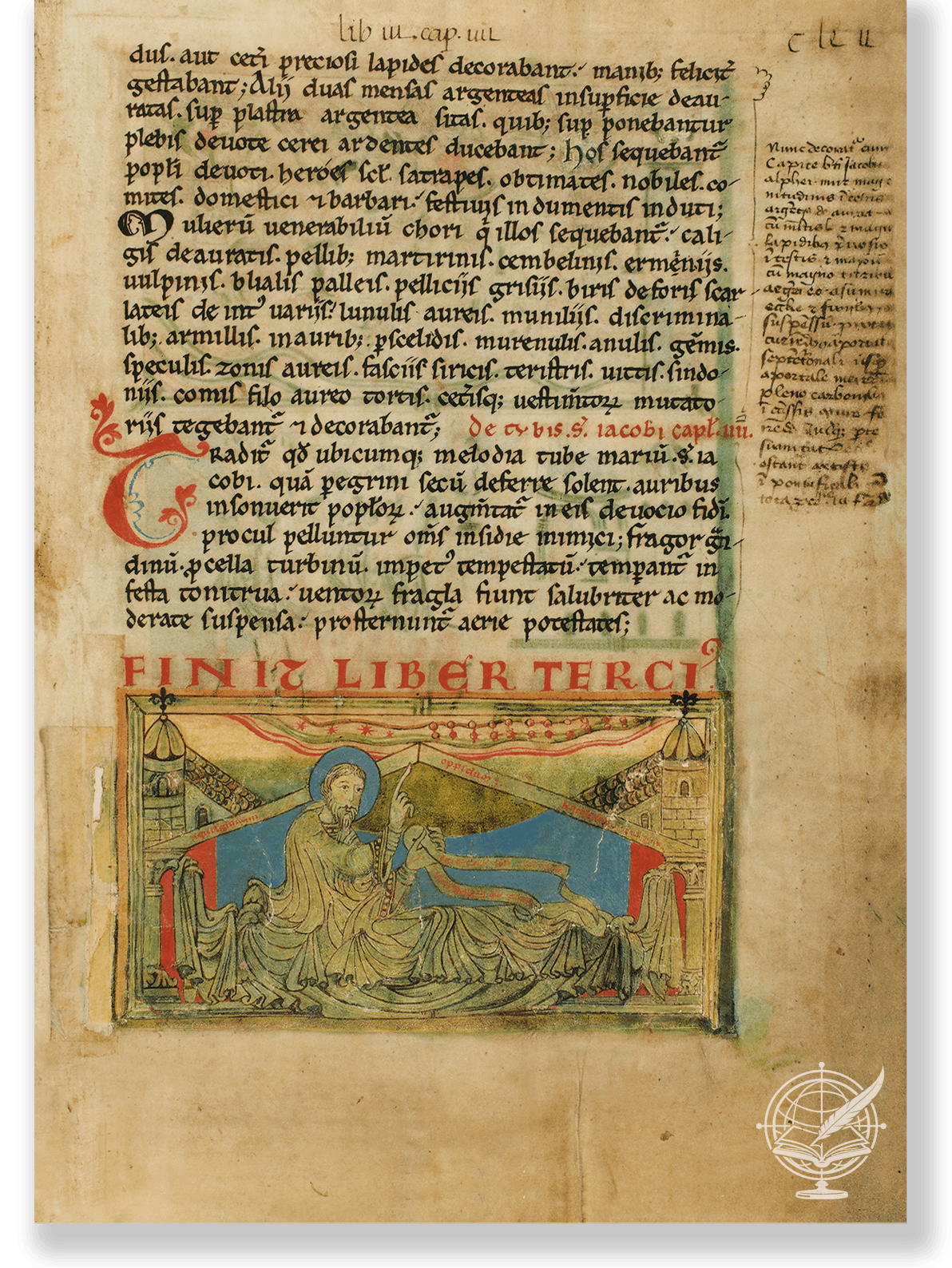
The Codex Calixtinus is a relatively portable book, similar in format to a missal, designed for use rather than monumental display. Measuring 294 × 214 mm, it contains 225 parchment folios of varying quality, some replaced due to wear. Its original content, up to folio 213, consists of five books. An appendix of twelve folios includes additional miracles, compositions, music, and a letter attributed to Pope Innocent authenticating the compilation. Numerous marginal notes reveal how the manuscript was corrected and expanded over time, demonstrating its continued relevance.
The first book, comprising more than half of the Codex (139 folios), focuses on liturgy, including sermons and celebrations centered around two key dates: July 25 (the Feast of Saint James) and December 30, reflecting both Roman and Hispanic traditions.
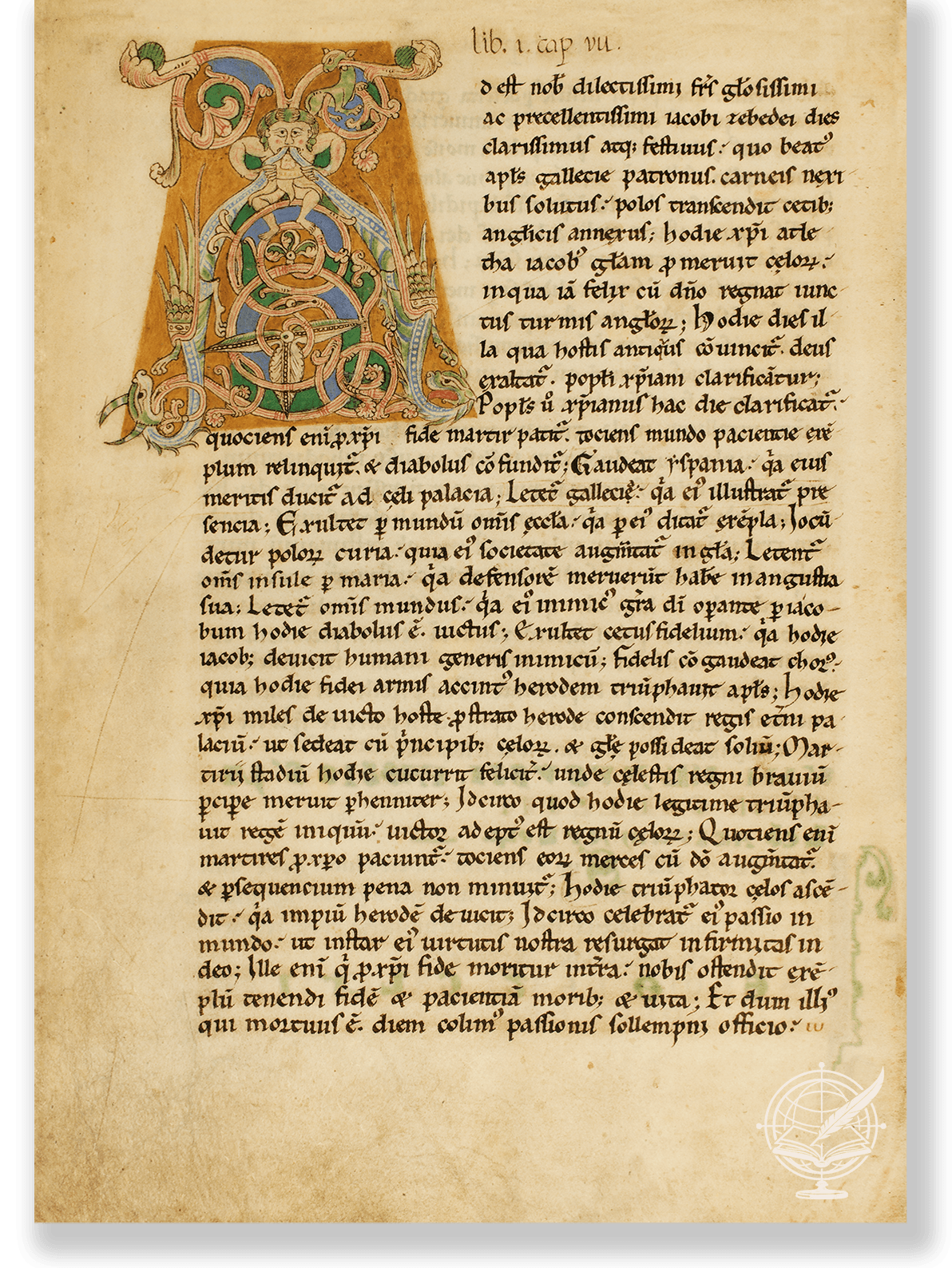
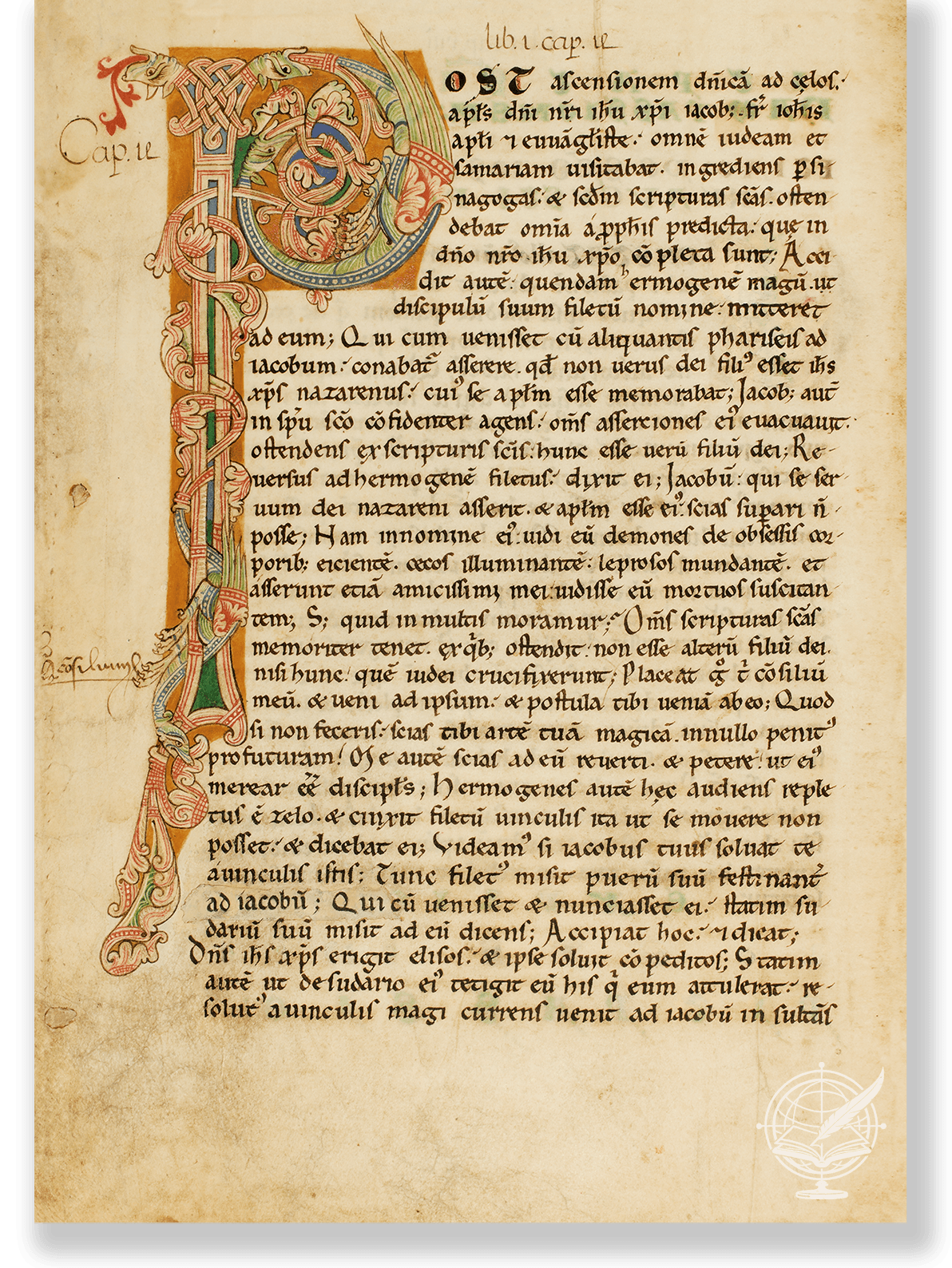
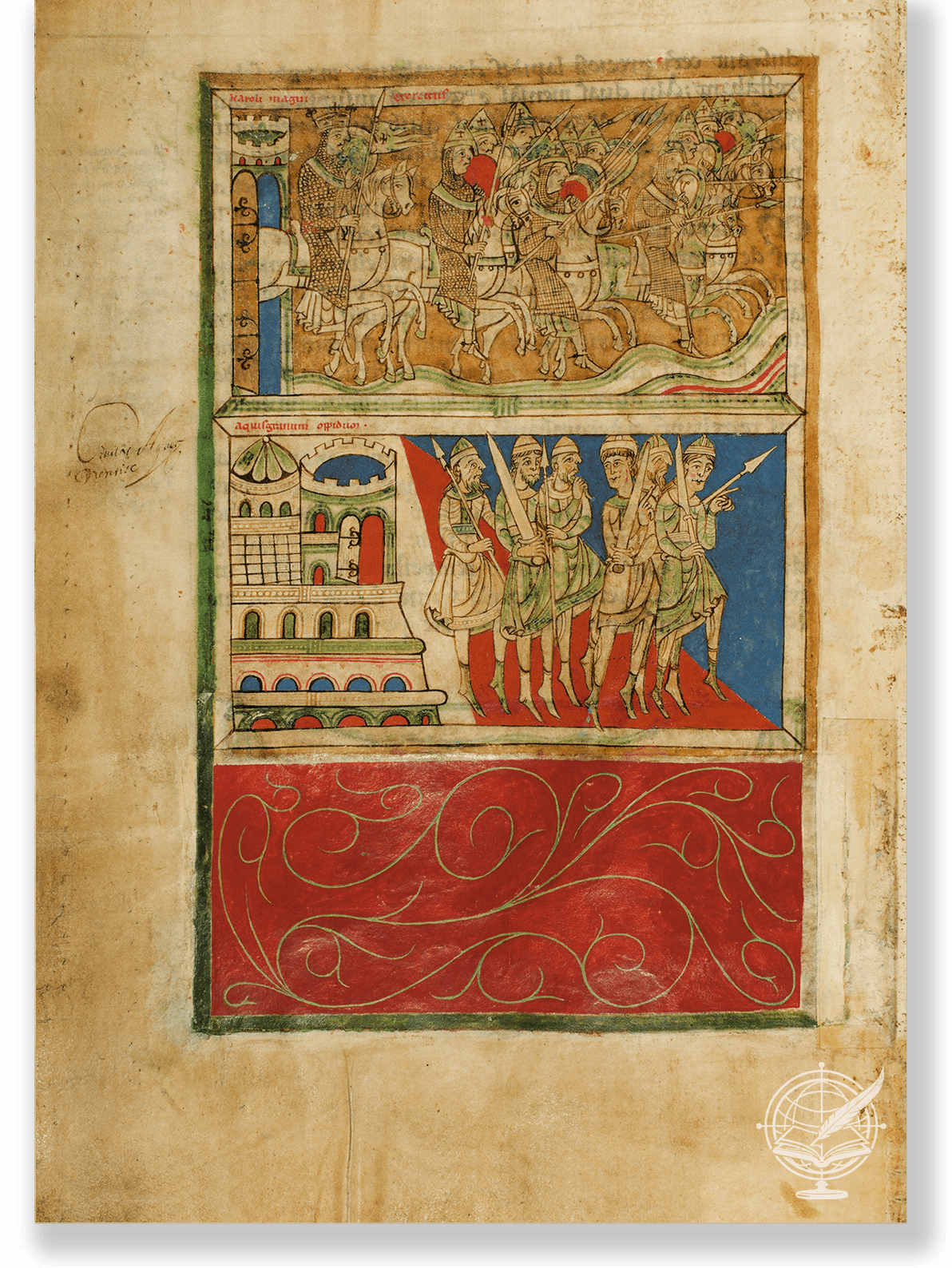
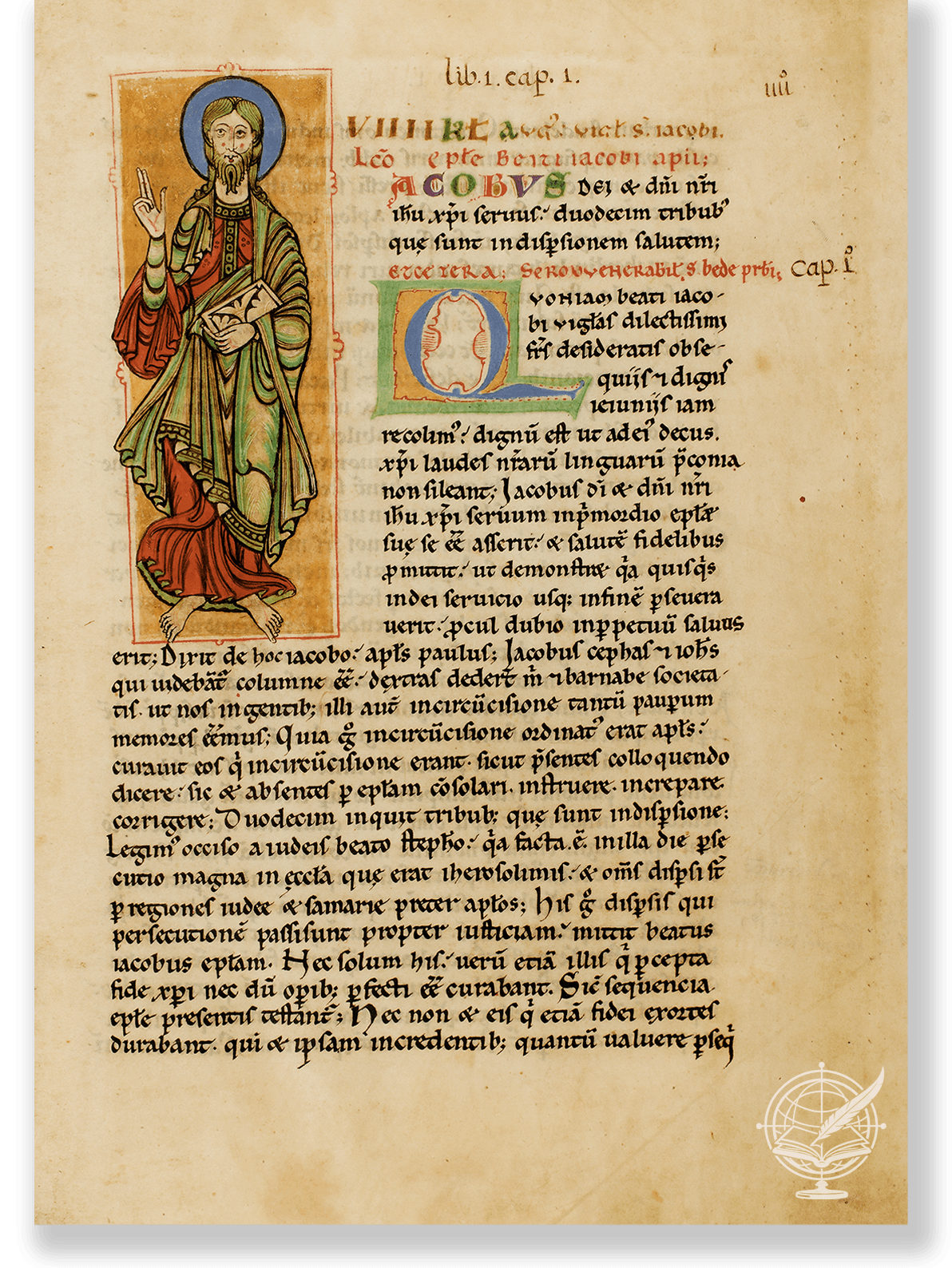
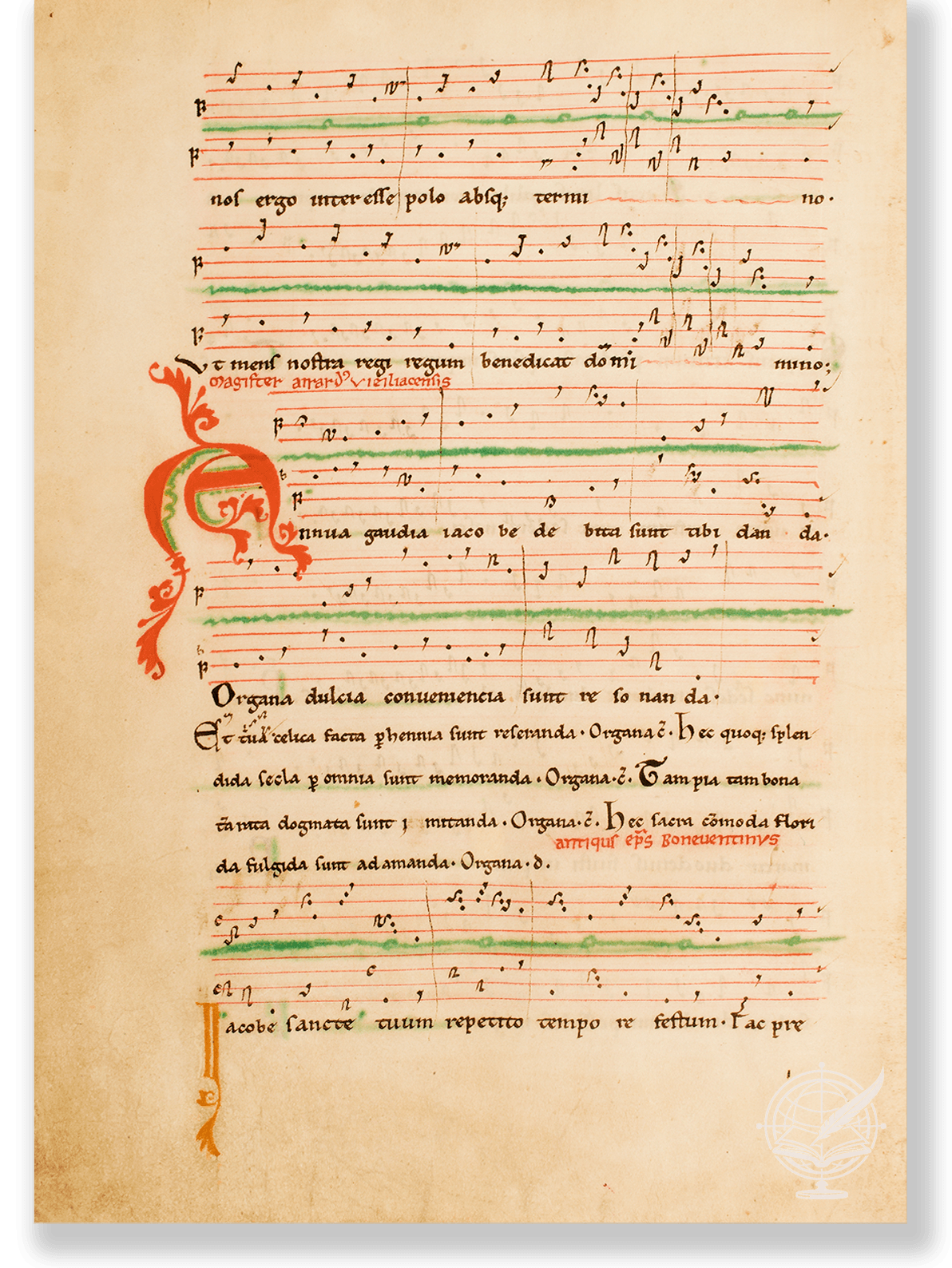
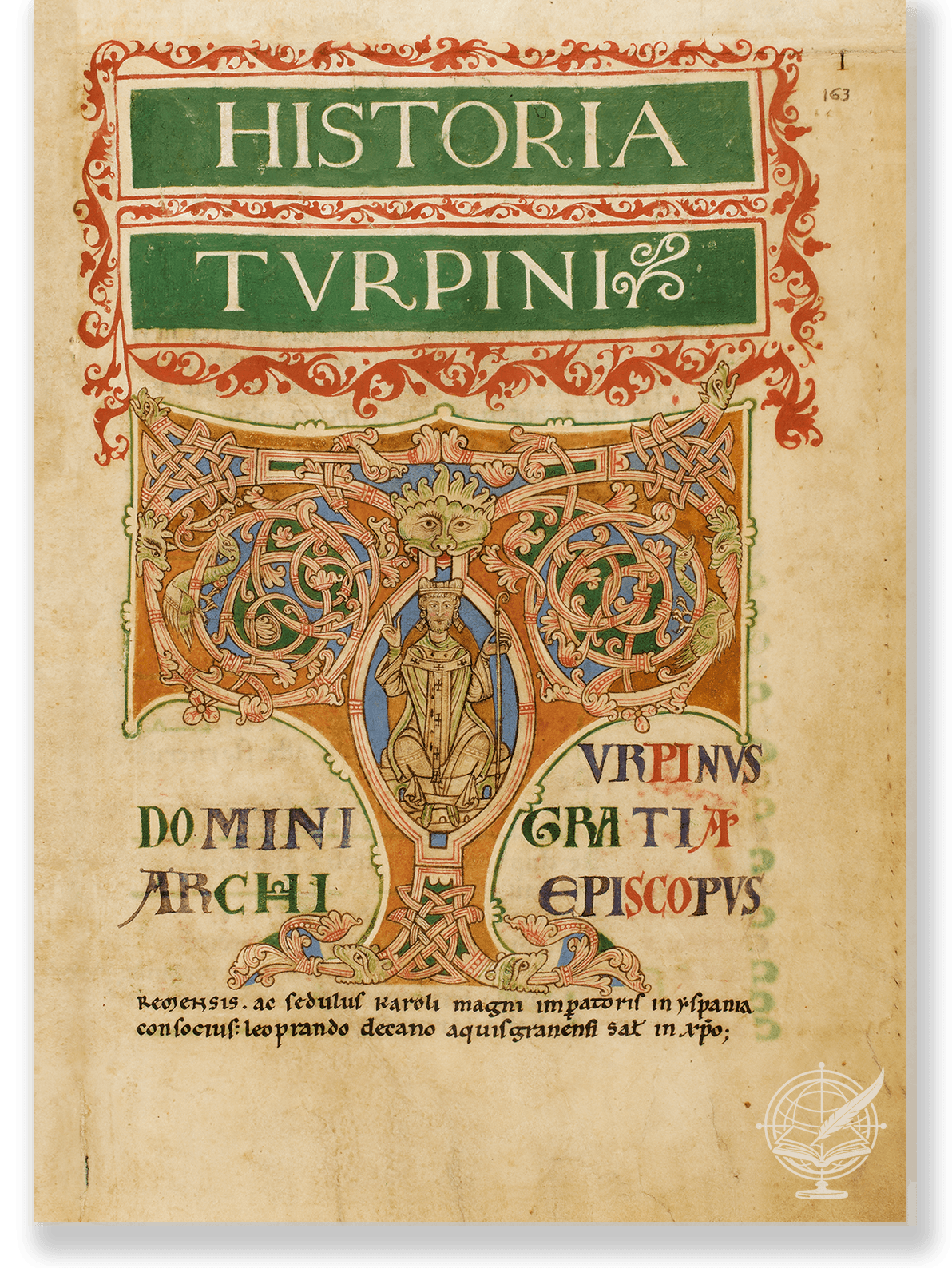
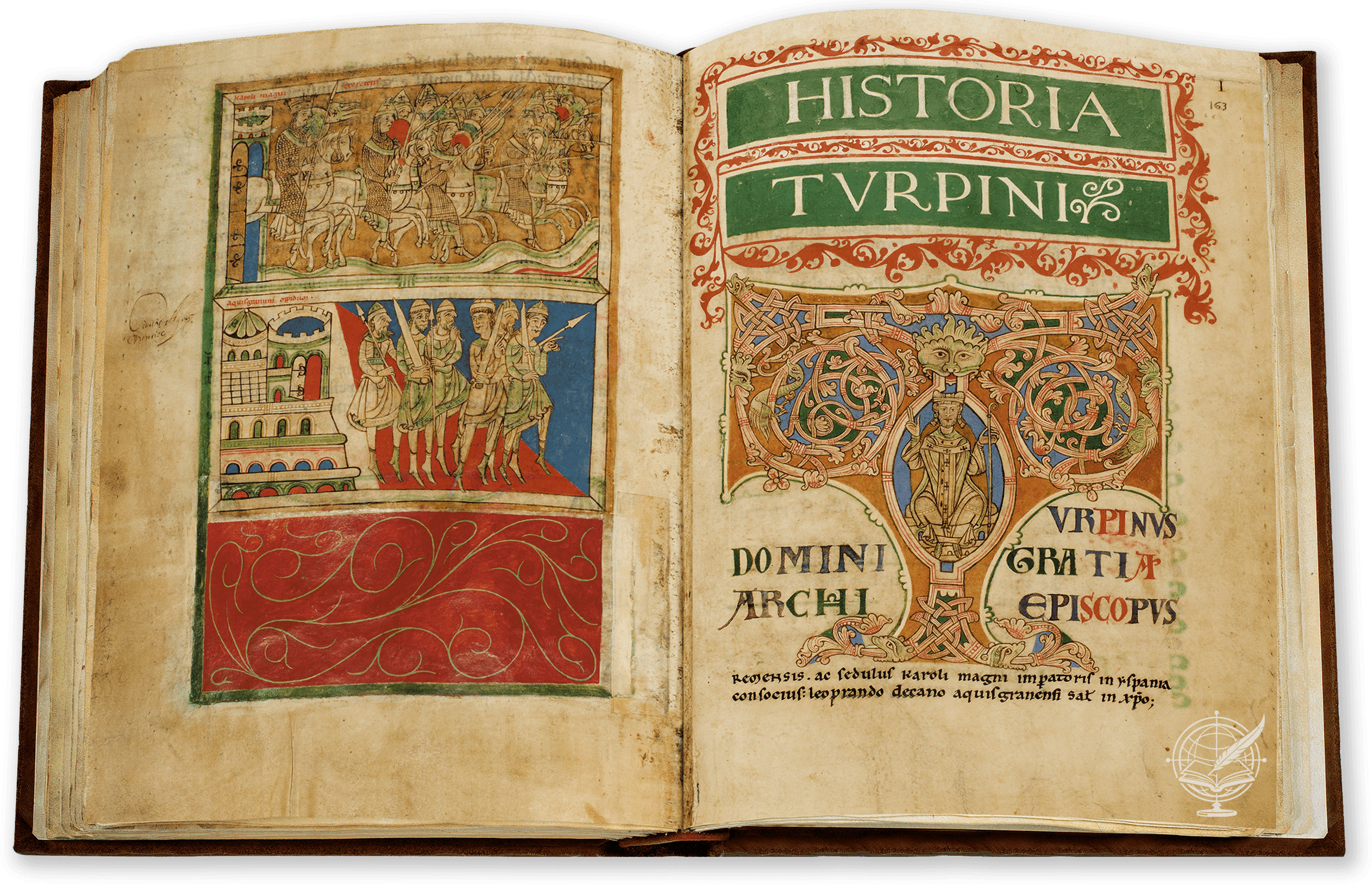
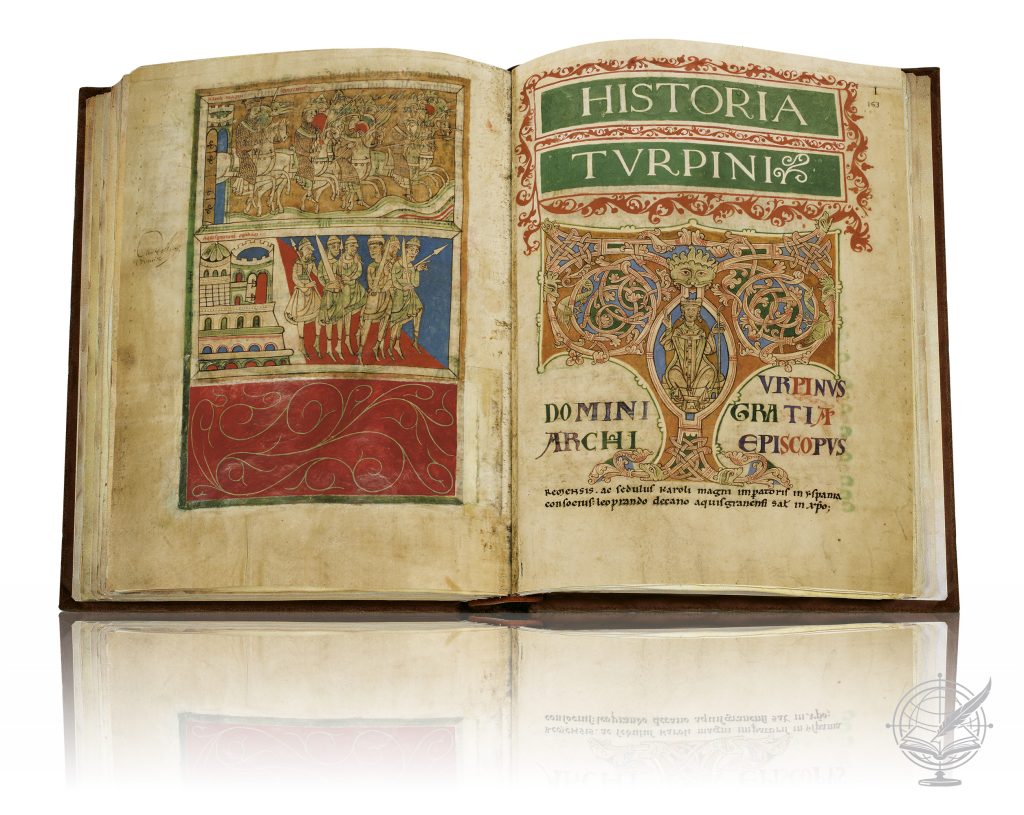
The manuscript features clear Carolingian script, illuminated with decorated capitals featuring vegetal motifs, interlacing patterns, serpents, and bestiary elements. It also includes musical notation using the tetragram, introduced in France and appearing for the first time in Hispania in this Codex. Remarkably, the appendix contains what is considered the oldest written polyphony (three voices) preserved by humanity.
The second book contains 22 miracles of Saint James from the 11th–12th centuries, often involving pilgrims facing danger or hardship. The third book recounts the translation of Saint James’ body to Compostela. The fourth book, known as the History of Turpin, narrates legendary accounts of Charlemagne and Roland. The fifth book, perhaps the most famous, is a detailed guide to the routes to Santiago and a vivid description of the city itself.
Ipsum scribenti sit gloria sitque legenti. May the reader who opens this Codex share in the same glory and joy as the pilgrim who reaches Compostela.
The upcoming Jacobean Holy Year 2027 has provided the opportunity for this work — conceived in the historical, religious, and symbolic context of the Middle Ages and known as the “Bible of the Camino de Santiago” — to reach modern readers in a limited edition. This is not a general publication, but a carefully produced facsimile edition, featuring specially manufactured parchment-like paper in different weights, reproducing folds, textures, and details using advanced photographic and printing techniques.
This edition is intended for bibliophiles, collectors, investors, and anyone wishing to own a unique work. Only 500 copies have been produced, individually numbered and notarized.
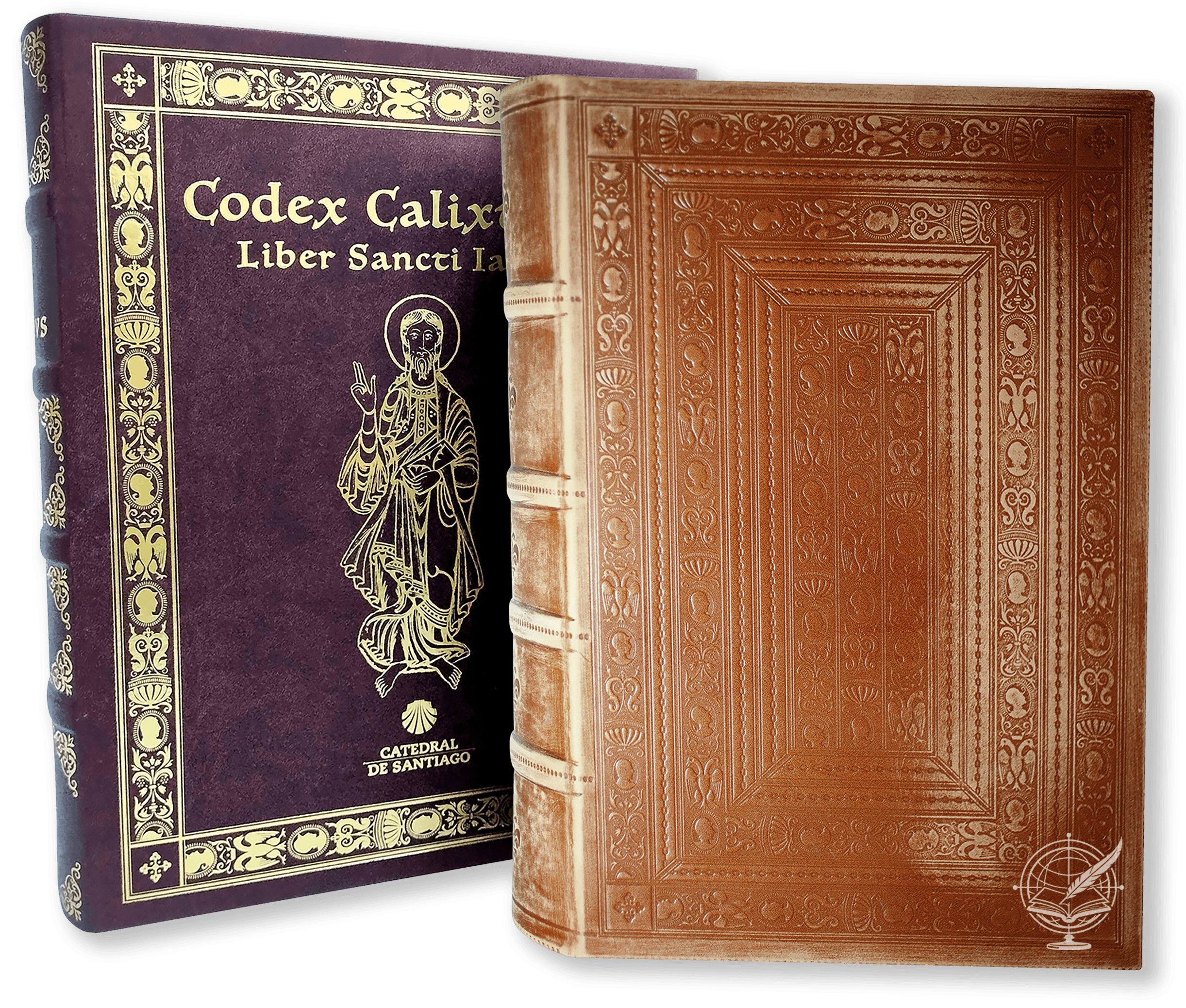
The facsimile edition of the Codex Calixtinus is presented in a protective case and includes a complementary scholarly volume prepared by subject specialists.
Details
Tech Sheet
DATE:
XII century.
ORIGINAL KEPT:
Archive of Santiago de Compostela Cathedral (Spain)
LANGUAGE:
Latin.
FORMAT:
294 x 214 mm.
PAGES:
450 pages.
ILUMINATION:
Decorated with plenty of full color miniatures, big capital letters, etc.
BINDING:
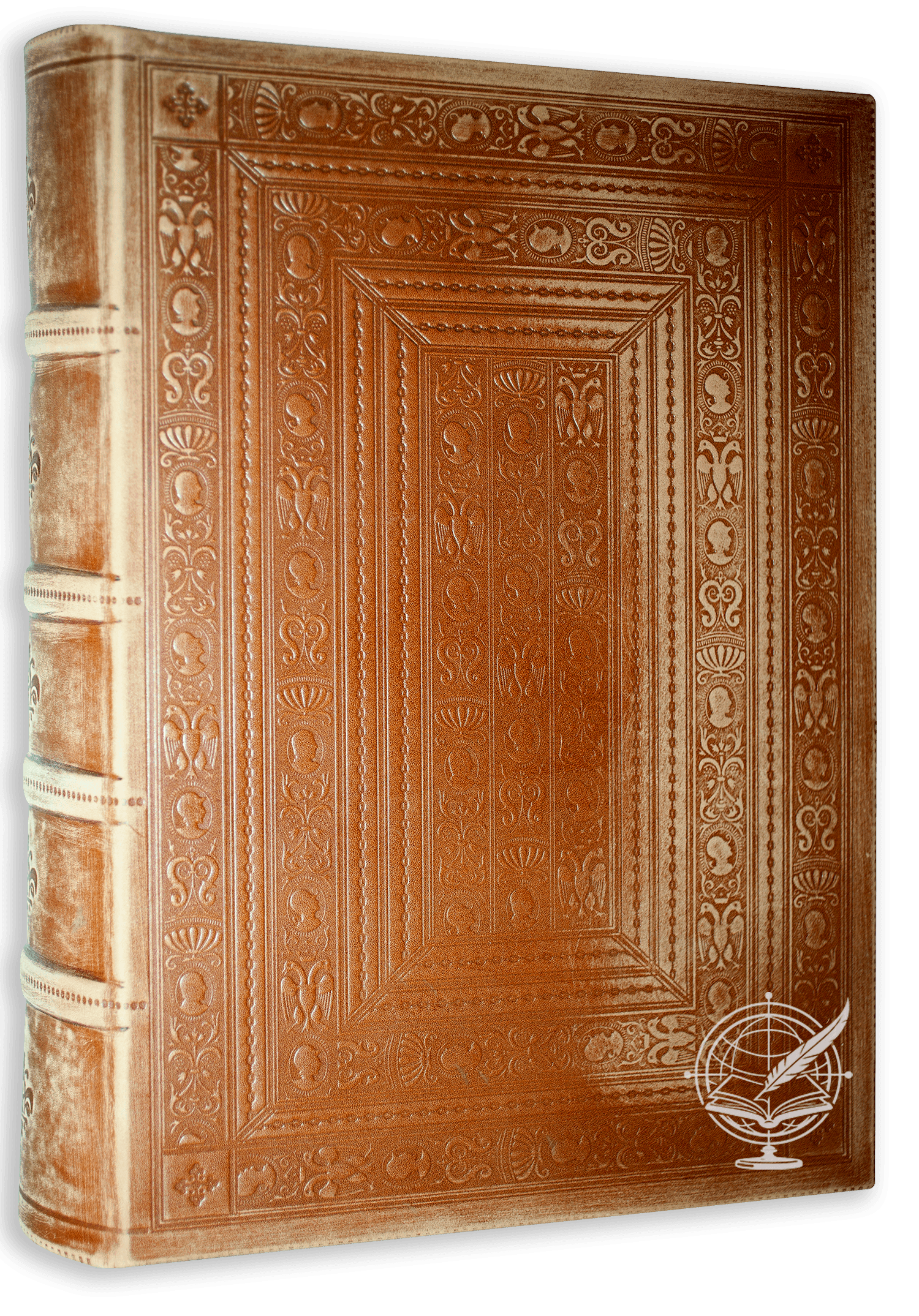
Bound in leather, heat-tooled with ornamental motifs
Interested? Contact us
If you want to know more on this beautiful facsimile, how to admire or acquire it, we will be delighted to attend you.